

Choose stones for your goals
Build a Crystal Chart for Daily Rituals works best when the purchase path is explicit. Verify the source, compare the offer against real alternatives, check the total cost, and confirm what happens after payment before you decide. After each comparison, write down the one risk that would change your mind. If the seller, condition, support, warranty, shipping, or upkeep still feels uncertain, resolve that question before moving to checkout.
The simplest way to use this section is to verify the seller, compare the total cost, and resolve the biggest risk before you commit.
Cleanse and charge your stones
Before adding crystals to your daily chart, you need to prepare them. New stones often carry residue from mining, manufacturing, or previous owners. Even crystals you already own accumulate environmental energy over time. Cleaning them removes this static so they can function as intended in your routine.
Clear physical debris
Start by brushing away any dust or loose particles. For durable stones like quartz or amethyst, a soft toothbrush works well. Use lukewarm water and mild soap only if the stone is non-porous and not water-soluble (avoid this for selenite, halite, or malachite). Dry them thoroughly with a lint-free cloth. This step ensures no physical grime interferes with the energy flow or visual clarity of your chart.
Smudge with smoke
Smoke cleansing is a traditional method for neutralizing heavy or stagnant energy. Light a bundle of dried sage, palo santo, or cedar. Let it smolder, then gently wave the smoke over each stone in your chart. Hold each crystal for a few seconds, visualizing the smoke lifting any unwanted residue. This works effectively for stones that cannot touch water. Ensure the area is well-ventilated to clear the smoke completely afterward.
Recharge under moonlight
Energy replenishment is often done using natural light. Full moonlight is the most common choice because it is gentle and consistent. Place your crystals on a windowsill or outside overnight during a full moon. This method is safe for most stones, including those that fade in direct sun like rose quartz or amethyst. If you miss the full moon, a new moon works well for setting fresh intentions for your chart.
Set a clear intention
Charging is incomplete without direction. Hold your cleaned stones and focus on a specific purpose for your chart. This could be clarity, protection, or organization. Visualize a bright light entering the stone and filling it with this purpose. This step anchors the crystal’s energy to your specific ritual goals, making it an active tool rather than just a decorative object.
Arrange stones by energy flow
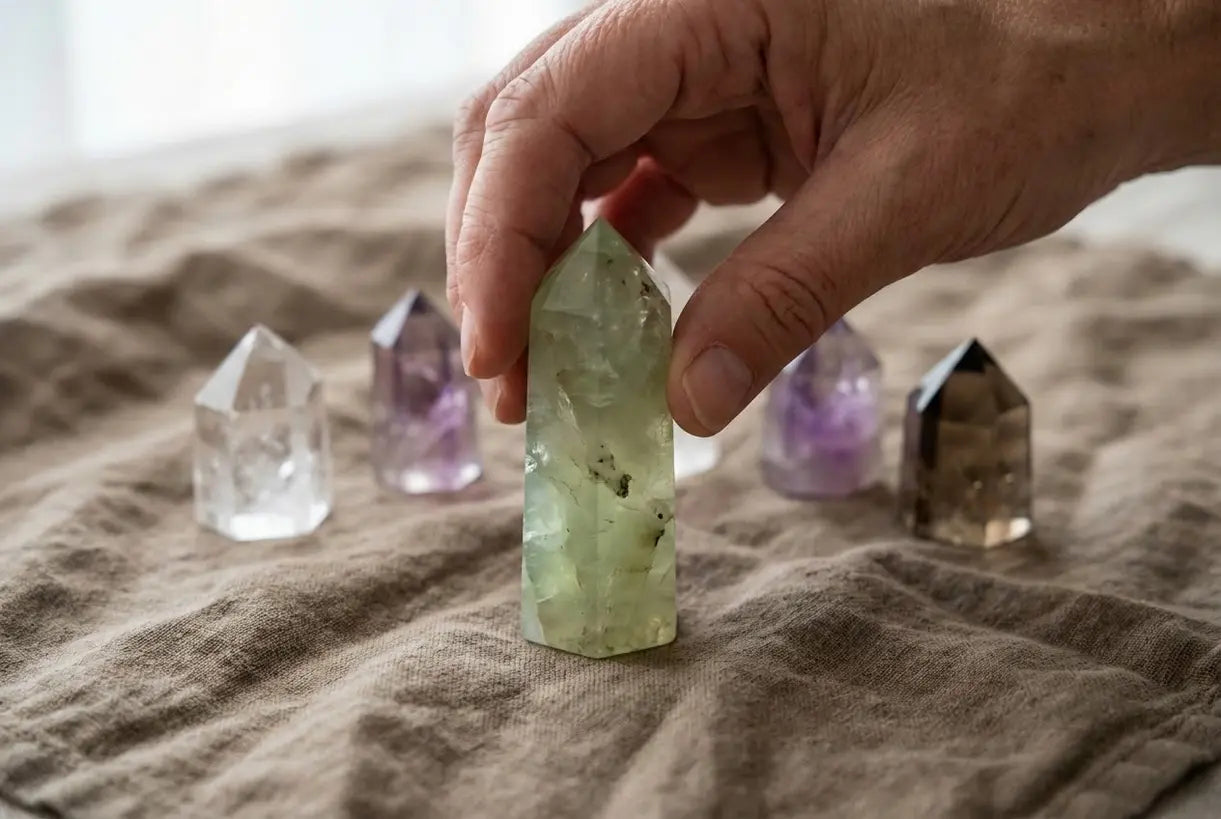
Start by placing your primary stone in the center of your chart. This stone acts as the anchor, setting the dominant intention for your daily ritual. Surround it with stones that support or amplify that specific goal. For example, if your chart focuses on clarity, place clear quartz at the center and pair it with fluorite or selenite along the edges to extend that energetic reach.
The arrangement should follow a logical path rather than a random scatter. A circular pattern works well for general harmony, while a linear layout suits focused, directional goals. Place stones with heavier, grounding properties like hematite or black tourmaline at the base or bottom of the chart to stabilize the energy. Lighter, more active stones like citrine or amethyst can sit higher up or in the center to keep the energy moving upward.
If you are using a digital chart, maintain the same spatial logic. Use visual hierarchy to indicate importance: make the central stone larger or more prominent, and use subtle borders or spacing to group supporting stones. This visual structure helps your brain quickly identify the core intention versus the supporting elements when you glance at the chart.

Avoid overcrowding the chart. Each stone should have enough space to "breathe" and hold its specific frequency. If you find yourself adding too many stones, revisit your primary intention. A focused chart with five to seven stones is often more effective than a cluttered one with twenty. Regularly clear your physical stones and reset your digital chart to maintain this clear energetic flow.
Update your chart seasonally
Treat your crystal chart as a living document rather than a static display. The stones you select today may no longer serve your needs in three months, especially if your goals or stress levels shift. A quarterly review ensures your ritual remains relevant and effective.
Start by cleansing all stones on the chart. Dust and energy residue can dull their presence. Wipe them down with a soft cloth or use your preferred cleansing method, such as smudging or placing them under moonlight. This physical cleaning also gives you a chance to inspect for cracks or chips that might have occurred during daily handling.
Next, assess your current intentions. Have your primary goals changed? If you previously focused on career growth but are now prioritizing rest, swap out high-energy stones like Carnelian for calming options like Lepidolite. Remove any crystals that feel heavy or disconnected from your current mindset. Replace them with stones that align with your new focus.
Finally, refresh the layout. Rearranging the stones can signal a fresh start to your subconscious. Use the checklist below to ensure you cover every step of the seasonal update.
By keeping your chart dynamic, you maintain a direct link between your physical environment and your internal state. This simple practice prevents the ritual from becoming background noise, keeping your daily intentions sharp and focused.
Avoid these common crystal chart mistakes
Building a crystal chart is less about collecting every stone you find and more about curating a specific energetic environment. Many beginners treat their chart like a rock garden, scattering pieces randomly until they run out of space. This approach dilutes the intent and creates visual noise that works against the meditative purpose of the ritual. A successful crystal chart relies on clarity, not quantity.
Overcrowding the Grid
The most frequent error is placing too many stones on a single grid. When you pack quartz, amethyst, rose quartz, and citrine into a small square, their individual frequencies begin to clash rather than harmonize. Think of your chart like a musical chord; if you play every note on the piano at once, it becomes dissonance. You need silence between the notes for the music to breathe.
Start with a maximum of four to six stones for a beginner chart. This limit forces you to choose only the stones that directly support your current intention. If you feel the need to add more, it is usually a sign that your intention has become too broad. Narrow your focus, and the chart will become more potent.
Ignoring Stone Compatibility
Not all crystals work well together. Some stones have opposing energetic properties that can create tension in the space. For example, highly activating stones like black tourmaline or red jasper can overpower calming stones like lepidolite or selenite if placed too close without a buffer. Always check the traditional properties of each stone before arranging them.
Use a neutralizer stone, such as clear quartz or selenite, to bridge gaps between opposing energies. Clear quartz is known for amplifying and balancing the properties of other crystals, making it an excellent connector in a crowded grid. This simple step prevents energetic friction and ensures your chart remains a coherent tool for your daily ritual.
Frequently asked: what to check next
Put Crystal Trends into practice
No comments yet. Be the first to share your thoughts!